
TO TOP

Funded (Sept. 2026 — Aug. 2029) by

the Agence Nationale de la Recherche (ANR) 
and the German Research Foundation (DFG) 
Programme for the Humanities and Social Sciences
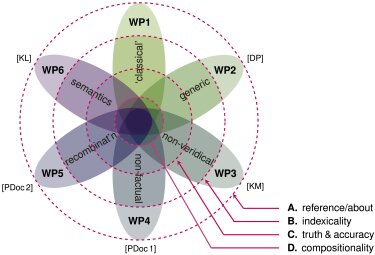
SEER will involve 1 Bochum-based (AOS: semantics/philosophy of language; deadline: April 1, 2026) and 1 Grenoble-based postdoc (AOS: philosophy of memory). 

The Bochum call can be found here: https://jobs.rub.de/jobposting/3e61519337e7b94f1573921e706d9124622094610?ref=homepage

  • April 1, 2026: deadline for applications
  • April 10, 2026: interviews (via Zoom)
  • early May, 2026: notification
  • Sept. 1, 2026: start of position

Back row: Denis Perrin (Grenoble), André Sant’Anna (Seoul)

Front row: James Openshaw (Singapore), Kourken Michaelian (PI, Grenoble), Kristina Liefke (PI, Bochum), Markus Werning (Bochum)

When we recall an event from our personal past, we build up a mental representation of this event. This representation captures what it was like to experience this event and carries rich perceptual information about this event. SEER studies episodic memory representations of this sort from the perspective of semantics and the philosophy of memory.

SEER aims to develop a novel framework for thinking about episodic representations that analyzes these representations through the same (semantic) tools as linguistic and iconic ‘meanings’ (e.g. possible worlds, truth-conditions, projection). It will show how this framework 

  • helps answer various issues in contemporary philosophy of memory, 
  • identifies new, fruitful concepts for metaphysics, epistemology, psychology & neuroscience, and 
  • provides a platform for two-way interaction between semanticists and philosophers of memory. 

SEER will pursue the above objectives in three steps: 

  • Firstly, it will show that episodic memory representations share the semantic properties of linguistic and iconic representations and can, thus, be analyzed through formal theories for these representations. 
  • Secondly, it will demonstrate how this analysis makes precise existing views and concepts from contemporary philosophy of memory. 
  • Thirdly, it will show, inversely, that this analysis is fruitful for semantics and the philosophy of language itself. 

SEER will illustrate the merits of this analysis on three current topics in the philosophy of memory: memories from non-veridical experiences like dreams, episodic memories of repeated events, and episodic future and counterfactual thought. These kinds of thought involve existentially non-committal, referentially unspecific, and non-factual episodic representations.