
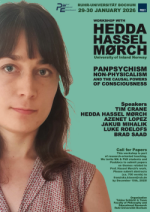
 Wir laden herzlich ein zu unserem Workshop zu Prof. Hedda Hassel Mørchs Buch Non-physicalist theories of consciousness (CUP 2024) an der Ruhr-Uni Bochum, 29.-30. Januar 2026. Eine Teilnahme über Zoom ist ebenfalls möglich. Weitere Informationen zum Programm finden Sie hier.
Zoom-Link: https://ruhr-uni-bochum.zoom-x.de/j/68712723667?pwd=73tbS3J07SaGsqHS9kd2aulgvxtvHw.1
Meeting-ID: 687 1272 3667 | Passwort: 502687
Wir freuen uns sehr, dass L.A. Paul (Yale) die nächsten Rudolf-Carnap Lectures halten wird. Vom 27.-29. Mai 2026 wird sie neue Arbeiten zum Thema Transformative Experience vorstellen.
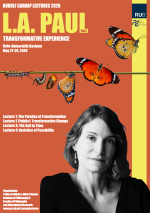 Lecture 1: The Paradox of Transformation
Lecture 2 (Public): Transformative Change
Lecture 3: The Self in Time
Lecture 4: Varieties of Possibility
Für den begleitenden Graduierten-Workshop laden wir Doktorand*innen und Postdoktorand*innen ein, Abstracts einzureichen zu Themen aus dem Kontext der Vorlesungen. Bitte senden Sie Abstracts (max. 1000 Wörter) bis zum 20. Februar 2026 an Franziska.Klasen@rub.de. Weitere Informationen hier.
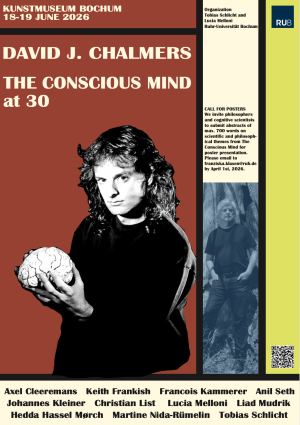 1996 erregte David Chalmers Aufmerksamkeit mit seinem Buch The Conscious Mind. In search of a fundamental theory (OUP). Er präsentierte starke philosophische Argumente und einfallsreiche Gedankenexperimente gegen den physikalistischen Mainstream in der Philosophie des Geistes und präsentierte nicht zuletzt das mittlerweile notorische "schwierige Problem des Bewusstseins", zusammen mit einigen nicht-reduktiven Ansätzen zum Bewusstsein. 30 Jahre später floriert die Wissenschaft des Bewusstseins mit ihrem Kern der Suche nach den neuronalen Korrelaten des Bewusstseins, mit "adversarial collaborations" zum Vergleich verschiedener Theorien und mit komplexen Überlegungen zu Indikatoren und Tests für Bewisstsein in Kleinkindern, nicht-menschlichen Tieren und künstlichen Systemen.
In diesem Workshop wollen wir gleichermaßen zurückblicken auf den großen Einfluss von The Conscious Mind wie auch nach vorn in die Zukunft der Wissenschaft des Bewusstseins. Wir freuen uns, eine Vielzahl von renommierten Philosoph*innen und Wissenschaftler*innen in Bochum begrüßen zu dürfen, um philosophische und wissenschaftliche Themen des Buches zu diskutieren: Axel Cleeremans, Keith Frankish, François Kammerer, Johannes Kleiner, Christian List, Lucia Melloni, Hedda Hasssel Mørch, Liad Mudrik, Martine Nida-Rümelin, und Anil Seth.
Wir laden außerdem junge Philosoph*innen und Wissenschaftler*innen ein, Abstracts (max. 700 words) zu Themen des Buches für Poster Präsentationen einzureichen. Bitte per Email an Franzsika.Klasen@rub.de bis 1. April 2026.

Copyright © bewusstsein 2026
Letzte Änderung: 26. Jan. 2026