
 Divinity and Necessity in the Timaeus
Supervision: Prof. Barbara Sattler
My principal current research interests revolve around Plato’s metaphysics and cosmology. My research project inquires into Divinity and Necessity in the Timaeus and investigates the relation into which Plato places them together and what this relation discloses about their natures. My aim is to examine how they are together as the origin of the universe: what Divinity is and how it is in relation to the disorder pertaining to Necessity, and how Necessity is in itself and how it is accordingly available to divine ordering.
Polysemy and Co-predication: A Case Study on Modern Standard Arabic
Supervision: Prof. Markus Werning
My doctoral project investigates Polysemy and Co-predication in Modern Standard Arabic (MSA). We focus on sentences with multiple senses, such as "The university hired John and got renovated" to understand the cognitive processes behind their comprehension. Our research explores how the brain navigates these sentences and processes simultaneous semantic shifts. Using empirical studies, we analyze participants' behavioral and cognitive responses through controlled experiments, gathering data on reaction times and accuracy. This approach sheds light on how individuals resolve semantic ambiguities during sentence comprehension.
 Philosophy of memory and the extended mind hypothesis
Supervision: Prof. Markus Werning
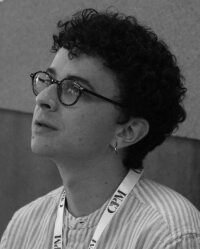
Juan F. Álvarez is a PhD student at the Centre for Philosophy of Memory at the Université Grenoble Alpes and the Institute for Philosophy II at the Ruhr-Universität Bochum. His research interests lie in the philosophy of mind. In his PhD thesis, Juan addresses questions about the nature of memory and remembering, such as whether an appropriate causal connection to the past is required for genuine remembering, if appropriate causation is compatible with the constructive character of memory, and whether causal accounts of memory are compatible with the extended mind hypothesis.

Project 10-SESC: Affective MIND Script: Situated Cognition and Affectivity in Everyday Social Interaction and Crowd Behavior
Project Leader: Julia Wolf
Co-Leader: Achim Stephan
This project develops comprehensive frameworks for understanding social interaction and collective behavior by integrating insights from situated cognition, affectivity, social script theory, crowd psychology, and social cognition. Through an interdisciplinary lens, it reconceptualizes both everyday interactions and collective phenomena such as crowd behavior and social movements. At its core, the project introduces the Affective MIND Script framework, which challenges dominant models of social cognition—particularly those centered on mindreading and mindshaping. In contrast to these high-cost, inference-heavy models, the framework argues that individuals navigate social situations primarily through default script-like mechanisms aimed at satisficing understanding and coordination. These low-cost, affectively attuned heuristics are embedded in scripts—reconceptualized as Modular, Internalized, Negotiable, and Distributed entities—that integrate cognitive, normative, and affective dimensions, enabling efficient, context-sensitive social coordination. Affect is central to this process, shaping how scripts are formed, stabilized, and adapted over time.
Building on this foundation, the project extends its analysis to the domain of crowd behavior and social movements, where it critiques traditional models and the existing social identity approach to understanding crowd psychology. By emphasizing the role of shared scripts, the project offers a unified, interdisciplinary perspective on how crowd behaviors and collective identities emerge, persist, and evolve—providing a robust theoretical and empirical foundation for studying both everyday social interactions and complex collective phenomena through the situated lens.
Ultimately, we aim to enrich current discourse across disciplines and open new avenues for research in social cognition, script theory, affect theory, crowd psychology.
 Deception by Large Language Models - a Mechanistic Perspective Grounded in the Philosophy of Artificial Minds
Supervision: Prof. Albert Newen, Prof. Christian Straßer
His research interests include AI deception, artificial minds, and mechanistic interpretability for LLMs. In particular, he is striving for a sound conceptualization of AI deception in terms of belief- and desire-like states. Equipped with a firm conceptual foundation, he aims to contribute to deception detection and mitigation approaches based on internal representations of truth and deceptive intent.
 Rational Decisions and Doxastic Attitudes in the Face of Epistemically and Personally Transformative Experiences
Supervision: Prof. Peter Brössel
Epistemically transformative experiences (ETEs) and personally transformative experiences (PTEs) are defined, respectively, as experiences that give access to contents supposedly inaccessible without first undergoing them and experiences that might significantly change the values of the agent (Paul 2014). Suggestive examples include losing or acquiring a sensory modality or a body part, deciding to have a child, and moving abroad. ETEs and PTEs have been considered an outstanding challenge to standard accounts of rationality in epistemology and decision theory. Indeed, the prospect of such experiences seems to prevent agents from rational deliberation, as in these cases – so it is argued – agents lack and can’t cognitively recover the relevant subjective contents to set their values, or their values might drastically change following the very decision. This research project aims to provide a theoretical evaluation of the notions of ETEs and PTEs, and the main hypothesis is that, although philosophically important, transformative experiences can be accounted for in some suitable theory of rationality. Specifically, it is argued that, in the face of ETEs and PTEs, agents are in a risky position and in a severe state of uncertainty, but this doesn’t forbid applying rational norms to their doxastic attitudes and decisions. For this purpose, on the one hand, a version of permissivism (Pettigrew 2022) is supported, and, on the other hand, comparing and building from existing proposals (e.g., Bradley 2017, Pettigrew 2019, Weirich 2021), formal tools are explored as philosophically justified solutions for some of the problems raised by transformative experiences.
Mental Constraints: A Dynamical Systems Approach to Mental Causation
Supervision: Prof. Albert Newen
Although cognitive sciences invoke mental states and processes, we lack an interdisciplinary definition of these terms. What are the differences between natural phenomena that enter into scientific explanations because they are causally efficacious, and other, non-mental phenomena? I address this question by applying the methodology developed in Dynamical Systems Theory, characterizing mental states and processes as elements of a causally efficacious topology that is realized by a diverse set of biological, and sometimes technological systems. Using this methodology, I show that mental states and processes are 1) non-reducible to biological states, qua being undetermined by them and 2) causally efficacious in a way that the systems realizing them are not. Accordingly, a central focus of my work is the issue of causality. I argue for the causal efficacy of mental states and processes using the theory of nonlinear causation. In further work, I would like to explore the extent to which a nonlinear theory of (mental) causation may provide the groundwork for unifying non-computational approaches in the cognitive sciences, such as 4E theories of cognition and Ecological Psychology.
 A Bayesian Pragmatics Approach towards a Theory of Humor
Supervision: Prof. Markus Werning
The comprehension of jokes seems to drastically differ from the comprehension of straightforward sentences. The aim of my PhD project is to investigate these differences experimentally and theoretically. For the experimental investigation we use electroencephalography, i.e. we analyze the event-related potentials of human subjects during the comprehension of jokes, or more precisely of puns. Our theoretical investigation of jokes follows the framework of Bayesian Pragmatics. This framework highlights the effects that preceding discourse has on the incoming discourse.
 Shame, Beauty, and Virtue in Aristotle
Supervision: Prof. Barbara Sattler
Broadly, my research project aims to clarify the relationship between virtue, shame, and beauty in moral philosophy, revealing how these aspects are deeply involved in one’s morality or ethical life. In this research, I am presently focusing on the analysis of the concept of shame, referred to as ‘aischunē’ and ‘aidōs,’ along with ‘aretē’ and ‘kalon’ in ancient Greek, based on Aristotle’s works and other Greek literature. In the course of my study, I am also trying to defend shame from the charge, leveled in Western society during the past few centuries, that it is a primitive emotion. Specifically, in my dissertation, the phrase ‘for the sake of the kalon (tou kalou heneka)’ in the Nicomachean Ethics, often characterised as the end or motive of a virtuous person, will be discussed in greater depth, along with aidōs/aischunē, aretē, and the role of the eyes of the [concrete/internalized] other to prove that (a) shame plays a crucial role in becoming a virtuous person in one’s ethical development, and (b) it could also be involved in leading a virtuous life.
 Mind wandering
Supervision: Prof. Tobias Schlicht
My current research delves into the conceptual issues surrounding mind wandering, aiming to provide a more robust framework to better clarify the explanandum of mind wandering research. Additionally, I am investigating the agential status of mind wandering and its relationship with automaticity. This includes exploring whether mind wandering is an automatic process, in what sense it can be considered automatic, and the role that control plays within it.
 The Impact of Socio-Epistemic Factors in Scientific Communities: an Agent-Based Modeling Approach
Supervision: Prof. Dunja Šešelja
The process of scientific inquiry is influenced by the way scientists interact, e.g. by arguing or communicating their results. In this project, I aim at understanding what is the impact of different types of interaction on scientific inquiry. In particular, I plan to study the group dynamics of a scientific community, so to explain certain collective outcomes based on the individual behaviour. In order to do so, I will combine a more philosophical approach (based on argumentation and conceptual analysis) to the use of formal modeling techniques. Employing computer simulations will allow me to trace back emergent phenomena to individual practices. As my objective is to highlight the role of argumentation and communication, I will mainly consider epistemically challenging scenarios, i.e. situations in which scientists have different backgrounds, different cognitive skills or different non-epistemic values. In fact, in those cases, good communication practices usually play a major role.
 On the Epistemic Use of the Imagination
Supervision: Prof. Markus Werning
My project investigates the epistemic or cognitive uses of the imagination, i.e., those uses of the imagination that are conducive to epistemic achievements, from a phenomenological point of view. The main goal is to argue that imagination possesses a sui generis epistemic role: it contributes to our knowledge not by resembling perception, but by relying on material drawn from and recombined from perception, memory, and prior and background beliefs.
 Formal Methods for Deontic Explanations in Bioethics
Supervision: Prof. Christian Straßer
Deontic logic is the branch of logic that studies prescriptive notions such as obligations, permissions and laws. My project belongs to deontic logic as it aims at developing formal tools to capture the distinctive behaviour of normative notions in a peculiar subfield of moral philosophy: bioethics. The approach that I employ focuses on the practice of producing, challenging and refining explanations in favour of a certain decision.
 Effects of enacted communication on meaning: Co-speech gestures and non-verbal signaling
Supervision: Prof. Markus Werning
According to the received view, the meaning of a sentence is compositionally determined by its syntactic structure and the lexical meanings of the words that figure therein (Hinzen et al. 2012; Werning 2004, 2005). In face-to-face communication, however, meaning is often enacted. How the listener interprets the speaker’s communicative intentions also depends on co-speech gestures and non-verbal signaling (McNeill et al. 1994). Their contributions to meaning may regard different linguistic levels: (i) the lexicon: e.g., uttering “John is sitting on an article” + wiggling up and down with fingers lets us interpret the expression sit on as typewriting (Dick et al. 2009); (ii) syntax/logical form: e.g., headshaking accompanying a sentence is interpreted as negation in many cultures (Fricke 2012); (iii) information structure/focus: eyebrow raising or pitch accent on a word raises logical alternatives (Ebert et al. 2011). Enactment directly feeds into sentence meaning composition and immediately affects truth conditions (Cosentino et al. 2017). Using an established correlation between surprisal and the N400-component in the event-related potential (Kuperberg & Jaeger 2016; Spychalska et al. 2016, 2019) we will develop predictions of a Bayesian model of linguistic enrichment (Werning & Cosentino 2017; Werning et al. 2019), test them in a series of EEG studies and adjust our theory.
 Natural Kinds at the Semantics-Pragmatics Interface: The Case of Episodic Memory and Evidentiality
Supervision: Prof. Kristina Liefke
I investigate the meaning of memory reports at the interface of linguistics and philosophy. Language seems to mark whether we remember a personally experienced event or a simple ‘fact’. For example, German ‘x erinnert sich, dass p’ (x remembers that p) is acceptable regardless of whether the speaker has personally experienced the event, but ‘x erinnert sich, wie p’ (x remembers how p) is rated significantly worse for the indirect experiencer. I am designing a series of studies to pin down the semantics of the memory verb (e.g., German ‘sich erinnern’ – ‘REFL remind’ vs. ‘noch wissen’ – ‘still know’) and the markers of personal experience (like ‘wie’, how). Based on the results, I hypothesize that (in line with the composition I put forth with my PI Kristina Liefke) the requirement of direct experience is just a pragmatic effect, and investigate the relation between experience and evidence, as well as between memory, knowledge, and imagination.
 Aphantasia and Cognitive Substitution
Supervision: Prof. Dr. Albert Newen
For most people, the ability to visualize appears to be an integral part of their everyday cognition. However, recent studies suggest that approximately 3.9% of the general population are unable to voluntarily generate visual mental imagery, a condition referred to as aphantasia (Dance et al., 2022; Zeman et al., 2015). Contrary to the predictions of theories that ascribe mental imagery a central role for our cognition (e.g., Nanay, 2023), aphantasics are not gravely cognitively impaired (Zeman, 2020) and are even able to solve tasks that were previously assumed to necessarily require the use of visual mental imagery, such as mental rotation tasks (Pounder et al., 2022; Crowder, 2018) or visual working memory tasks (Bainbridge et al., 2021; Jacobs et al., 2018). Thus, although aphantasics are unable to visualize, this does not imply an impairment with respect to a range of tasks that were supposed to rely on this ability, suggesting that aphantasics are substituting their lack of visualization by means of alternative cognitive strategies. In my project, I am investigating the condition of aphantasia to better understand the actual importance of visual mental imagery for our cognition and analyze the alternative strategies used by aphantasics to solve visual mental imagery tasks.
 Mismatches between Natural Language and Formal Logic
Supervision: Prof. Kristina Liefke
My dissertation investigates the relationship between natural languages and formal logic. While the claim that these two mismatch in some way is commonly accepted, the resulting epistemological and methodological implications remain largely unexplored. In this regard, to what exact extent the meaning of sentential connectives and quantifiers deviate from their counterparts in formal logic deserves further scrutiny. My dissertation studies these mismatches both on the conceptual and the formal level. In the former case, different conceptions of logicality and linguistic meaning are surveyed, further developed and, ultimately, contrasted. In the latter case, alternative logics, in particular for quantification, are researched. On the basis of these findings, the aforementioned implications both to philosophy as well as neighbouring disciplines can finally be properly examined.
 Belief-Formation Processes in Epistemic Communities: Investigations by Means of Agent-Based Modeling
Supervision: Prof. Dunja Šešelja, Prof. Christian Straßer
Should epistemic workers of the world unite? There are some thoughts or decision we would make only when hanging around with friends, colleagues, and strangers. Same for people doing cognitive tasks for their living. Soong is working with agent-based-models in hope to see how computer simulations would predict and suggest a better conveyor belt of knowledge production.

Copyright © institut_2 2026
Letzte Änderung: 02. Mär. 2026